
- Tsaone Segaetsho
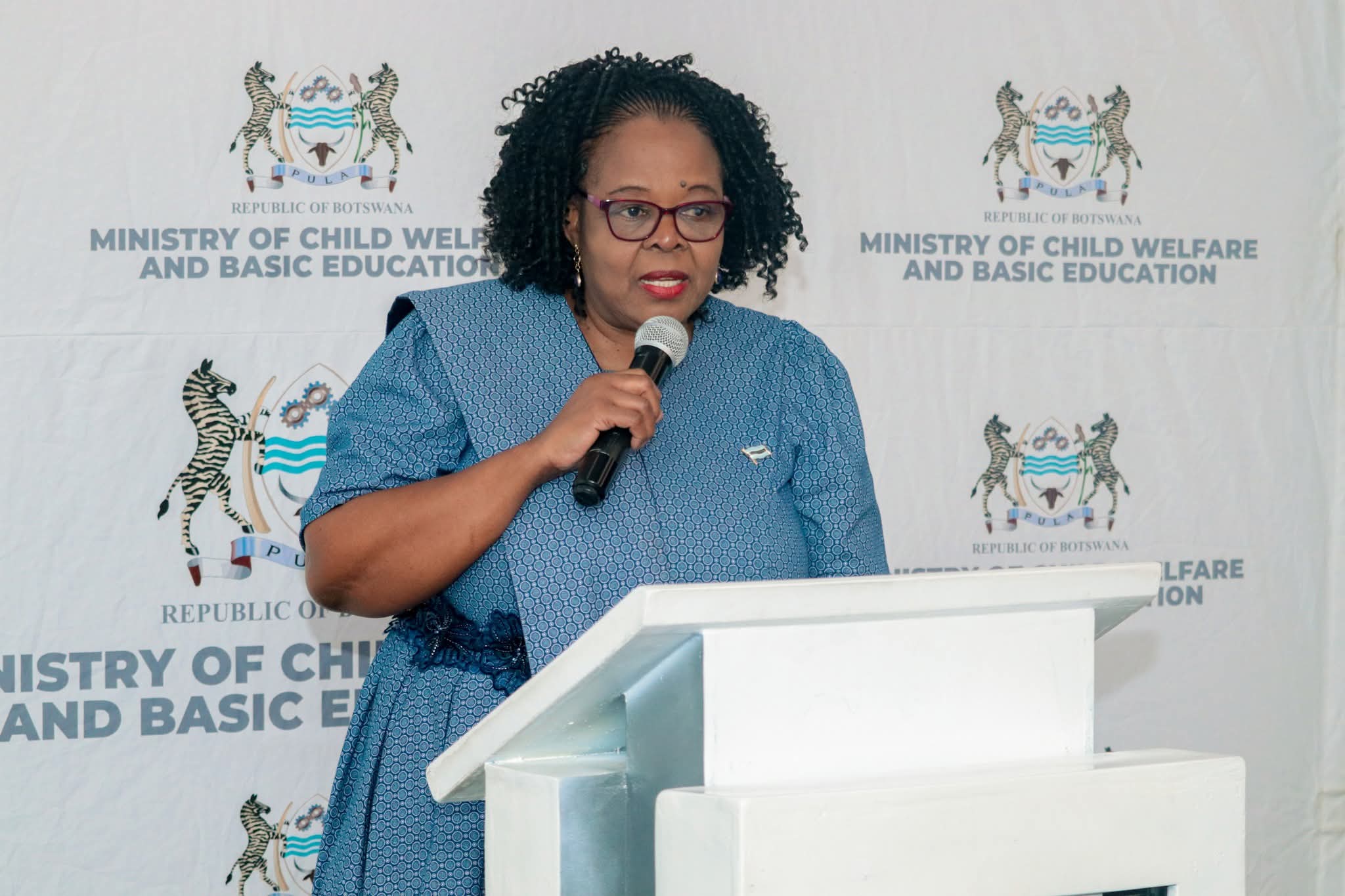
The World Bank-funded education project aimed at strengthening Botswana’s basic education system is expected to be finalised in the coming weeks, according to the Ministry of Child Welfare and Basic Education.
The ministry, in collaboration with the World Bank, is in the process of concluding a loan agreement for the Promoting Participation and Enhancing Learning (PROPEL) project. The financing package is estimated at US$104.4 million, equivalent to approximately BWP1.41 billion.
The initiative was first referenced by Duma Boko during his State of the Nation Address in November last year.
According to the ministry, the project aligns with Botswana’s Vision 2036 agenda, Sustainable Development Goal 4, the Second Transitional National Development Plan (TNDP), the Botswana Economic Transformation Programme (BETP), and National Development Plan 12.
The PROPEL project is structured around six key components aimed at improving participation and learning outcomes across the education sector. These include expanding access to pre-primary education, increasing participation at senior secondary level, improving the physical learning environment, strengthening access to quality teaching and learning materials, enhancing teacher training and professional development, and reinforcing workforce policy frameworks.
The programme will also support school-based student assessment systems, as well as national-level monitoring and benchmarking of educational performance.
Botswana already ranks among the region’s highest spenders on education. According to a 2019 World Bank report, public expenditure on education stood at 7.1 per cent of gross domestic product (GDP), representing 22.2 per cent of the national budget.
“Considering the country’s level of economic development, Botswana spends more on education as a share of GDP than income peers such as Colombia, Brazil, Costa Rica and South Africa,” the World Bank noted at the time.
However, the institution also observed that nearly one-third of Botswana’s education budget was allocated to tertiary education, limiting the proportion directed towards school-level education.
The World Bank further noted that the bulk of spending within the basic education sector was absorbed by salaries and recurrent expenditure, leaving limited fiscal space for infrastructure development and capital investment.
“Given the relatively high level of public education spending, the availability of fiscal resources in the education sector is regarded as adequate. However, there will be pressure to shift resources to currently underfunded areas, including the construction of additional classrooms and schools, or the provision of new textbooks, which would allow authorities to address the current underutilisation of teaching staff in secondary schools,” the institution said in its assessment of Botswana’s education sector.