
- Tsaone Segaetsho
Botswana Development Corporation Limited (BDC) has taken a significant step towards reducing the country’s reliance on imported dairy products with the arrival of the first 200 high-yield dairy cows at Milk Valley Farm in Lobatse, marking the beginning of a phased importation of 1,000 cows.
The milestone forms part of BDC’s broader strategy to strengthen Botswana’s dairy industry, improve food security and support the government’s economic diversification agenda. It also responds to President Duma Boko’s commitment, outlined in his State of the Nation Address last November, to reduce the country’s heavy dependence on imported milk, which currently accounts for approximately 90 per cent of domestic consumption.
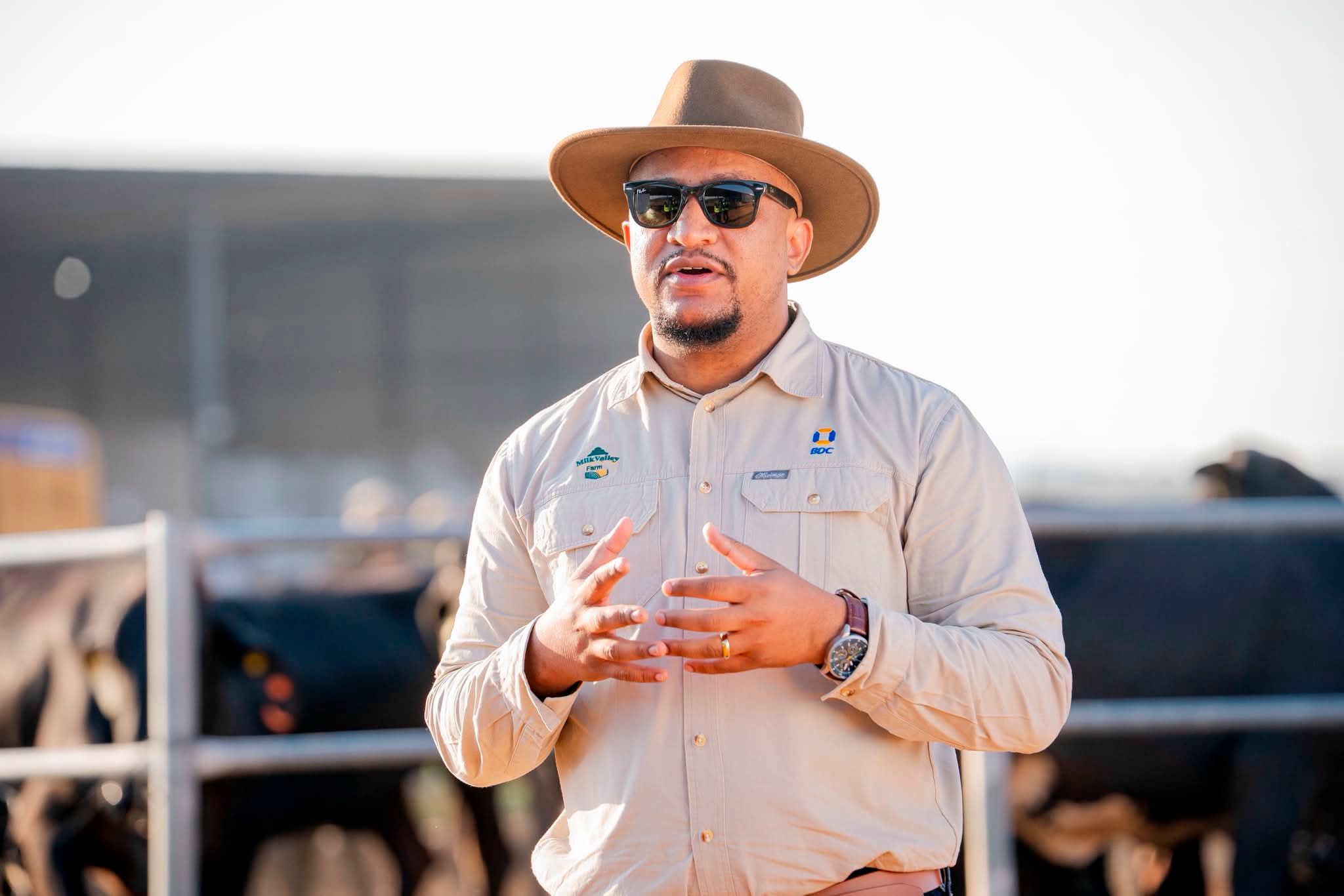
Speaking during the official arrival of the first consignment of cattle at the farm, situated just over 100 kilometres from Gaborone, BDC Managing Director Oteng Keabetswe said the corporation aims to reduce milk imports from 90 per cent to 50 per cent over the next 24 months.
“Our target is that over the next 24 months we reduce importation from 90 per cent to 50 per cent. Once the project reaches full operation, we intend to replicate the same model across Botswana,” Keabetswe said.
He noted that, beyond increasing domestic milk production, the investment is expected to create employment opportunities, stimulate growth across the dairy value chain and contribute meaningfully to Botswana’s economic transformation.
According to BDC, Milk Valley Farm is being developed with world-class genetics, modern infrastructure and stringent biosecurity systems. The long-term objective is to establish a herd of 3,000 dairy cattle capable of significantly increasing local milk production and reducing dependence on imports.
Keabetswe added that BDC plans to establish similar dairy production facilities in the central and northern regions once the Lobatse operation reaches full capacity, creating a nationwide network of dairy farms capable of meeting Botswana’s growing demand for milk.
The farm recently achieved Approved Foot-and-Mouth Disease (FMD)-Free Dairy Compartment Status, a significant milestone that underscores its adherence to internationally recognised animal health and biosecurity standards.
The imported Girolando breed, renowned for its high milk yields and ability to thrive in semi-arid environments, has been selected for its suitability to Botswana’s climatic conditions. Of the first consignment, 186 pregnant cows will undergo a carefully managed acclimatisation process under strict veterinary supervision to safeguard their health and welfare.
The project positions Milk Valley Farm as a flagship investment in Botswana’s agricultural transformation, demonstrating how strategic public investment can strengthen food security, reduce import dependency and unlock long-term opportunities within the country’s livestock sector.