

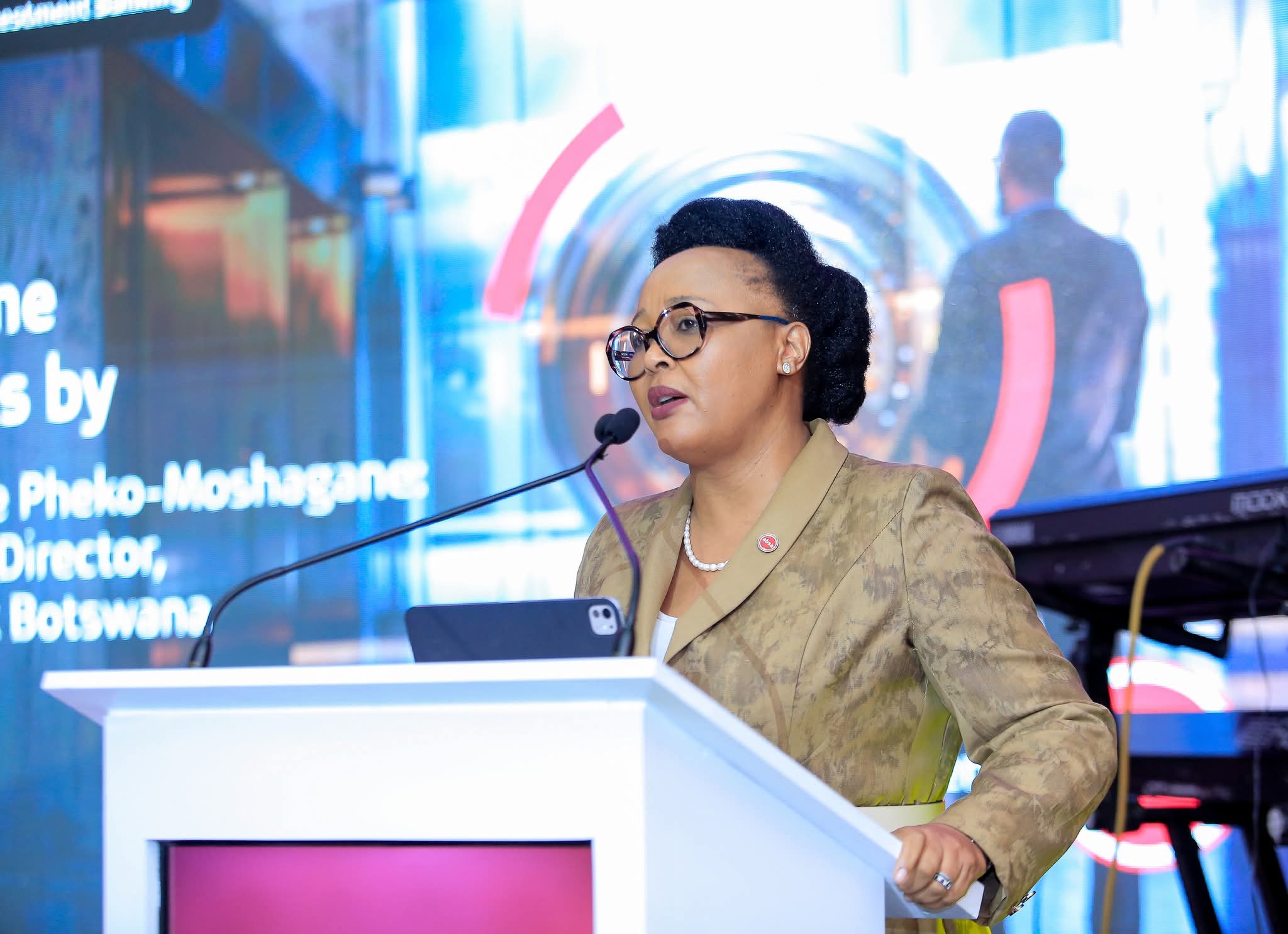
- Tsaone Segaetsho
Botswana must accelerate its mining diversification agenda to ensure that the country’s emerging critical minerals industry delivers far greater value than the export of raw resources, according to Absa Bank Botswana Managing Director Keabetswe Pheko-Moshagane.
Speaking at the ongoing Future of Mining Summit, Pheko-Moshagane said the global transition towards clean energy and advanced technologies presents Botswana with a rare opportunity to build new industries, create skilled employment and drive more inclusive economic growth.
“There is no better time to have this conversation than now, as the global transition to clean energy and advanced technologies is dramatically increasing demand for critical minerals such as copper, cobalt, nickel and lithium,” she said.
Pheko-Moshagane stressed that unlocking the full value of critical minerals will require Botswana to fundamentally rethink how mining is financed.
“Traditionally, mining finance has focused on funding individual assets – in other words, the mine itself. The next mining economy requires a much broader vision and financing model,” she said.
Rather than financing isolated projects, Botswana should adopt an ecosystem approach that supports the entire mining value chain, from exploration and infrastructure development to energy, water, beneficiation, manufacturing, logistics, supplier development, skills training and export industries.
She said banks must evolve from being project financiers to becoming enablers of integrated mining ecosystems, while reflecting on existing financing models and identifying areas that require enhancement to support Botswana’s next phase of mining-led growth.
Pheko-Moshagane also highlighted the opportunity for commercial banks to work more closely with Government and private investors to unlock funding for exploration and early-stage mining ventures.
She noted that such partnerships should be underpinned by clearly defined frameworks that facilitate effective risk mitigation and risk-sharing, particularly during the high-risk early stages of mining projects.
Beyond financing, she said Botswana must strengthen its position as a preferred investment destination for critical minerals.
Pheko-Moshagane noted that mining investment across Africa has increased steadily since 2020, driven by growing global demand for minerals essential to battery technologies, renewable energy systems and advanced manufacturing.
“While global capital is already moving towards Africa, the winning formula for Botswana is to be intentional in ensuring that a greater share of that investment is directed here,” she said.
According to Pheko-Moshagane, achieving this will require predictable policy frameworks, a strong pipeline of bankable projects, modern infrastructure and innovative financing solutions capable of attracting long-term domestic and international capital.
She added that financial institutions have a pivotal role to play in structuring sustainable financing solutions that align government priorities, investor expectations and private sector growth, ultimately positioning mining as a catalyst for Botswana’s broader economic diversification agenda rather than an extractive industry in isolation.