
- Tsaone Segaetsho
Vice President and Minister of Finance and Development, Ndaba Gaolathe, has called on multilateral organisations and development finance institutions that fund sovereign nations to move beyond traditional lending models and instead partner with countries to build capacity at scale.
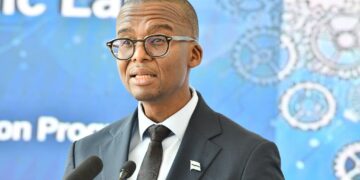
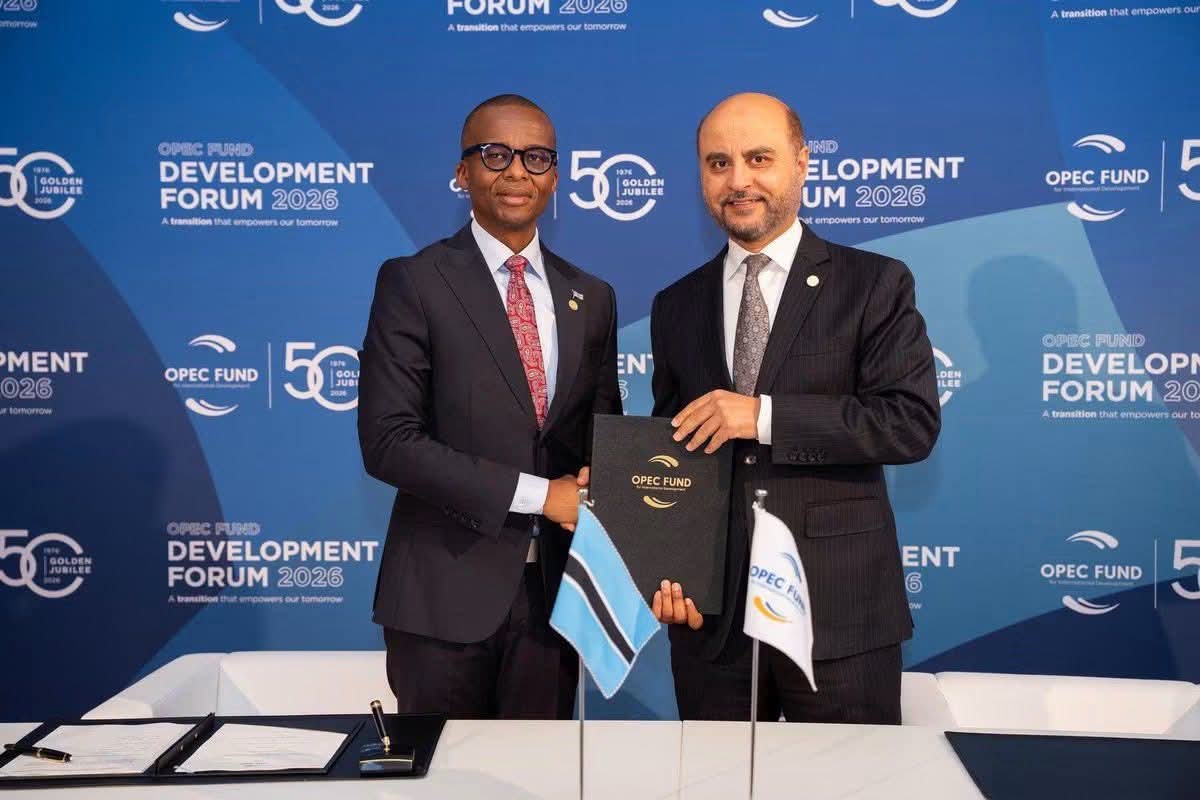
Speaking in Vienna, Austria, during the Organisation of the Petroleum Exporting Countries (OPEC) Fund’s 50th Anniversary and Development Forum 2026, Gaolathe emphasised the importance of sustainable development partnerships that prioritise implementation, institutional capacity and long-term economic transformation over debt accumulation.
Participating in a fireside chat titled “Upgrading Local Value Chains”, which explored how infrastructure investment can drive economic diversification and prosperity across Africa, Gaolathe reflected on Botswana’s economic journey and the need for a new growth model.
He noted that Botswana’s development had historically been driven by diamond revenues and mineral wealth, which enabled the country to build critical infrastructure and improve living standards. However, he cautioned that this model is no longer sufficient in a rapidly changing global economy.
“We have to diversify the economy; we diversify or perish,” said Gaolathe.
The Vice President outlined Botswana’s Economic Transformation Programme, describing it as a strategy focused on implementation, impact and execution.
According to Gaolathe, Botswana has often struggled to convert plans into tangible outcomes, resulting in delayed development projects and missed economic opportunities. The transformation programme seeks to address these challenges by strengthening execution capabilities and building national capacity at scale.
The African Development Bank (AfDB), one of the participants at the forum and a key partner in Botswana’s Economic Transformation Programme, reiterated its commitment to supporting economic diversification, value addition and job creation through private sector-led growth.
The bank noted that its support for growth-enhancing infrastructure projects is aimed at improving competitiveness and productivity while creating an enabling environment for sustainable private sector development.
Gaolathe also highlighted what he described as a shift in the approach of multilateral development institutions. Unlike traditional funding models that relied largely on standard loan instruments, he said today’s leadership is increasingly open to collaboration, innovation and co-creating solutions with sovereign governments.
“In the past, institutions such as the AfDB helped countries build projects, but today it is not enough to simply build projects. Ecosystems must be built,” he said.
“Multilateral organisations need financial instruments that go beyond loan funding. They must recognise the unique risk profiles of different countries and embrace innovative tools such as guarantees, first-loss mechanisms and blended finance structures.”
A second key issue, according to Gaolathe, is the importance of sequencing development interventions. He argued that funding projects without first establishing the necessary infrastructure, skills base and institutional support often results in underperforming investments.
He cited examples where factories or large-scale projects were financed despite a lack of supporting infrastructure or adequately skilled human capital, creating the risk of so-called “white elephant” projects.
However, Gaolathe expressed optimism about the evolving role of multilateral institutions, noting that many are now listening more closely to sovereign governments and demonstrating a willingness to collaborate in designing integrated development solutions.
“Multilateral organisations should co-create with sovereign nations to build capacity at scale,” he said.
The OPEC Fund Development Forum serves as a strategic platform that brings together global leaders, policymakers, development institutions and private sector stakeholders to transform dialogue into tangible development outcomes.
At the 2025 forum, commitments exceeding US$6 billion were announced, including major initiatives focused on climate action, trade facilitation and development financing.
Prior to Gaolathe’s departure for Austria, Botswana’s Ministry of Finance stated that the country’s participation in the forum reflects its growing partnership with the OPEC Fund, formalised through the signing of a Country Partnership Framework in 2025.
The ministry further noted that the OPEC Fund has committed up to US$800 million (approximately P10.86 billion)towards Botswana’s priority investments in infrastructure, renewable energy, innovation, digital transformation and private sector-led growth.
In addition to financial support, the fund is expected to provide technical assistance and capacity-building programmes aimed at strengthening government institutions and enhancing project implementation capabilities.